New Mexico Seasonal Vegetable Planting and Sowing Calendar
A useful planting calendar for New Mexico has to account for more than the month: elevation, exposure, soil warmth, and local frost patterns all affect what can go in the ground. This calendar organizes vegetables by season and growing conditions, so you can choose a sensible window for your garden rather than rely on one statewide date.
Why New Mexico Needs a Flexible Planting Calendar
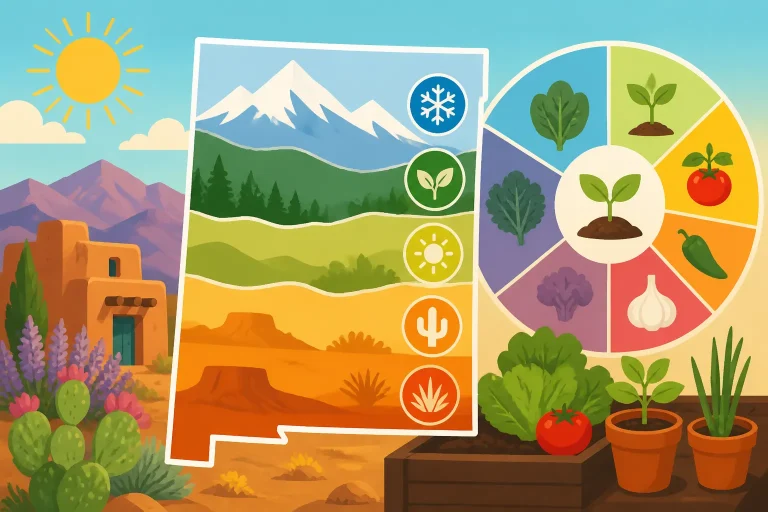
New Mexico’s growing conditions vary widely. A garden in a warm, low-elevation location may be ready for heat-loving crops while a higher or more exposed garden is still dealing with chilly nights. Even nearby yards can differ: a sunny, sheltered bed may warm earlier than a shaded area, and a low spot can stay colder than the surrounding ground.
That means a calendar is best used as a planning tool, not a promise. The season named on a seed packet or regional chart can help narrow your options, but your garden’s conditions decide whether the window is actually suitable. For a broader view of how location changes planting timing, see New Mexico Planting Calendar by Elevation and Zone and Matching Your Garden Schedule to New Mexico Microclimates.
Before planning a sowing date, consider:
- Elevation and regional climate. Higher areas often have a shorter warm-weather growing window than warmer low-elevation sites.
- Frost exposure. Your garden may be more or less exposed than a nearby weather station. Use New Mexico Frost Timing and Growing Season Guide to understand why frost timing matters, then observe your own yard.
- Sun and shelter. A sunny bed near a windbreak may warm sooner than an open, shaded, or wind-exposed bed.
- Soil temperature and moisture. A calendar date does not make cold, dry, compacted, or waterlogged soil ready for seed.
- Crop preference. Peas and leafy greens are usually more comfortable in cool conditions than tomatoes, peppers, or beans.
The most reliable approach is to build a calendar around seasonal cues. For cool-weather crops, check whether the soil is workable and whether the crop can tolerate the remaining chill. For warm-weather crops, wait for conditions that support steady growth rather than trying to gain a few early days at the cost of stressed plants.
A local calendar can narrow down the likely season, but the final decision should reflect your yard. Keep notes on when your soil becomes workable, when tender plants stop struggling with cold nights, and which beds warm earliest. Those observations become more useful each season.
Plan by Crop, Garden Conditions, and Sowing Method
Vegetables do not all need the same start. Some grow well from seed sown directly into the bed; others benefit from being started indoors and transplanted once outdoor conditions are suitable. Some can be planted in more than one seasonal window, while others are best planned around a particular stretch of cool or warm weather.
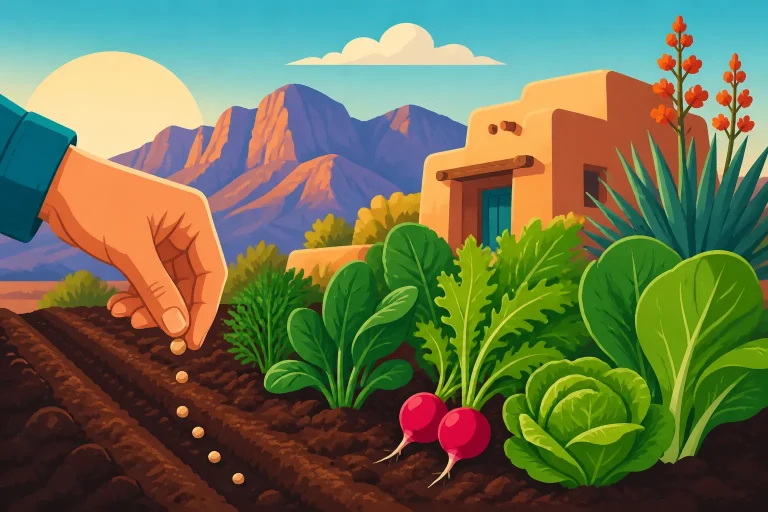
New Mexico State University describes direct seeding as sowing crops like carrots and beans straight into the garden soil when conditions are favorable. That method avoids transplanting, which can disturb roots, and works well for crops that establish readily in place. The phrase “when conditions are favorable” matters: a seed needs suitable soil and moisture, not just a spot on the calendar.
Transplanting offers another option. New Mexico State University explains that starting tender plants like tomatoes and peppers indoors to get a head start on the season can help gardeners prepare for the outdoor growing window. Indoor starts need appropriate light, water, and space, and they still need to adjust to outdoor conditions before planting in the bed. For more detail on that approach, see Starting Vegetable Transplants Indoors for New Mexico Gardens.
| Season or condition | Crops to consider | Common approach | What to check |
|---|---|---|---|
| Cool, workable soil | Peas, spinach, lettuce, radishes, carrots, and other cool-season crops | Direct sow many crops; transplant some leafy crops if desired | Soil should be workable, with moisture suited to germination |
| Warming spring conditions | Beans, squash, corn, and other warm-season crops | Direct sow once the soil and weather are suitable | Check for cold nights and slow soil warming |
| Warm growing conditions | Tomatoes, peppers, eggplant, and other tender crops | Set out hardened transplants or sow suitable crops directly | Make sure the bed is warm and the plants can handle outdoor conditions |
| Late-summer cooling trend | Fast-growing greens, radishes, and other crops suited to a fall harvest | Direct sow or transplant, depending on the crop | Allow enough time for establishment before cold weather returns |
| Mild fall conditions | Crops suited to cool weather, including some leafy greens and roots | Direct sow or transplant according to crop and local conditions | Watch the forecast and protect crops if needed |
The table is a starting point, not a set of fixed statewide dates. For each crop, check the seed packet or plant label for maturity information and growing preferences. Botanical Interests seed packets, like those from other reputable suppliers, can help you compare a crop’s conditions and sowing instructions with what your garden can provide. Treat that information as a guide, then adjust for your site.
It also helps to separate “can be planted” from “is likely to thrive.” A seed may germinate in marginal conditions but establish slowly, while a transplant may sit without growing if the soil is too cold. Waiting for a suitable window can produce stronger growth and reduce the need to rescue plants from weather stress.
For a closer comparison of the trade-offs, read Direct Seeding vs. Transplanting Vegetables in New Mexico. Neither method is automatically best. Choose based on the crop, your growing conditions, the time you have, and whether the plant handles root disturbance well.
Early Spring: Start with Crops That Welcome Cool Conditions
Early spring is a planning challenge because sunny days can make a garden feel ready before the soil and nights have caught up. Cool-season crops give gardeners more flexibility than tender vegetables, but “cool-season” does not mean that every crop should be sown into cold, saturated, or crusted ground.
Peas, spinach, lettuce, radishes, and carrots are common choices for the early part of the garden year. Their preferred conditions differ, so read the instructions for each crop. Some seeds germinate reliably in cool soil, while others establish more readily after the ground has warmed. A bed that is easy to prepare and has adequate moisture is a better signal than a warm afternoon by itself.
Prepare the bed before sowing
A little preparation makes direct sowing more dependable:
- Clear away old plant debris and loosen the surface enough to create a seedbed.
- Break up large clods so small seeds can make good contact with the soil.
- Check that water can reach the seed zone without washing seeds away.
- Mark rows or planting areas before sowing, especially when the seedling rows may be difficult to distinguish from weeds.
- Keep the surface from drying out while seeds are germinating.
Small seeds are easy to sow too thickly or too deeply. Follow the packet’s depth and spacing directions, and avoid burying seeds more deeply simply because the surface soil dries quickly. If the soil surface dries between waterings, gentle watering can help keep it suitable for germination without displacing seed.
Sow in stages when conditions are uncertain
If you are unsure whether your bed is ready, you do not have to plant the entire planned area at once. Sow a short row or a small section first, then see how quickly it germinates and establishes. This gives you a practical check on the bed and reduces the risk of losing a large sowing to poor conditions.
You can also stagger sowings of crops that are harvested young, such as radishes or leaf lettuce. Rather than relying on one large sowing to provide a continuous harvest, plant smaller batches as conditions allow. The interval between batches depends on the crop and how quickly your garden changes, so use the crop instructions and your own results as a guide.
Early spring weather can shift quickly. Keep row cover or another suitable protection option available if your garden is exposed to cold, wind, or abrupt weather changes. Covers can help moderate conditions, but they do not remove the need to monitor the forecast and the plants beneath them. For crop-specific timing ideas, see Cool-Season Crops to Direct-Sow Before the Last New Mexico Frost and Early Spring Sowing Windows for New Mexico High Deserts.
Keep an eye on emergence
After sowing, check the bed rather than assuming that a missed row has failed. Seedlings may emerge unevenly, especially where moisture varies across a bed. Give a sowing time to establish before disturbing the soil or sowing over the same space. If seedlings are crowded, thin them according to crop instructions so remaining plants have room to grow.
A cool-season planting can also be lost to heat later on. If a crop begins to bolt, turn bitter, or stop producing usable leaves as the weather warms, harvest what remains and use the bed for a crop suited to the next conditions. That transition is part of seasonal planning, not a sign that the early sowing was a mistake.
Spring and Early Summer: Move into Warm-Season Crops Carefully
Warm-season vegetables need more than a bright day. Tomatoes, peppers, squash, beans, and similar crops grow best when the weather and soil support active growth. Planting tender crops before conditions are suitable can leave them stalled, stressed, or vulnerable to a cold spell.
Think of warm-season planting as a transition rather than one universal date. In a warmer, sheltered bed, the soil may become suitable sooner than in an exposed or higher-elevation garden. Even within the same garden, a raised bed or sunny wall-side area may warm faster than a low, shaded bed. These differences can be useful, but they do not guarantee protection from a sudden change in weather.
Decide whether to sow or transplant
Direct sowing is practical for crops that establish well in place, including many beans and squash. It avoids the work of raising plants indoors and eliminates transplant shock. It also means the seed remains outdoors while it germinates, so the bed must be ready and kept appropriately moist.
Transplants can help with crops that take time to establish or are sensitive to an abbreviated warm-weather window. Tomatoes and peppers are common examples. New Mexico State University notes that indoor starting can give these tender plants an earlier start, but indoor seedlings still need to be acclimated gradually to outdoor light, wind, and temperature conditions before they are set out. For help comparing those crops with local freeze timing, see Timing Tomato and Pepper Planting Around New Mexico Freeze Dates.
When choosing transplants, look for sturdy growth and a healthy root system rather than simply choosing the largest plant. A large, crowded transplant may take longer to adjust than a compact plant with strong stems. Avoid damaging roots as you move seedlings, and water them carefully after planting so the root area settles into the bed.
Harden off indoor starts
Indoor-grown seedlings are used to a more protected environment than an open garden. Gradually exposing them to outdoor conditions gives them time to adjust. Start with a protected location and limited exposure, then increase outdoor time and sun exposure as conditions permit. Bring plants back under cover when weather or wind is harsh.
The hardening-off process can be easy to overlook when the weather seems settled. Yet a plant that moves directly from a sheltered indoor space into intense sun or wind can become stressed even if the temperature looks favorable. Keep an eye on leaf condition and soil moisture while seedlings adapt.
Direct sow into suitable soil
For beans and other warm-season crops, sow into a bed that is warming and workable. Follow the seed packet for planting depth and spacing. A seed that is too deep may struggle to emerge; a seed planted too shallowly may dry out. Good seed-to-soil contact and steady, appropriate moisture are important for even germination.
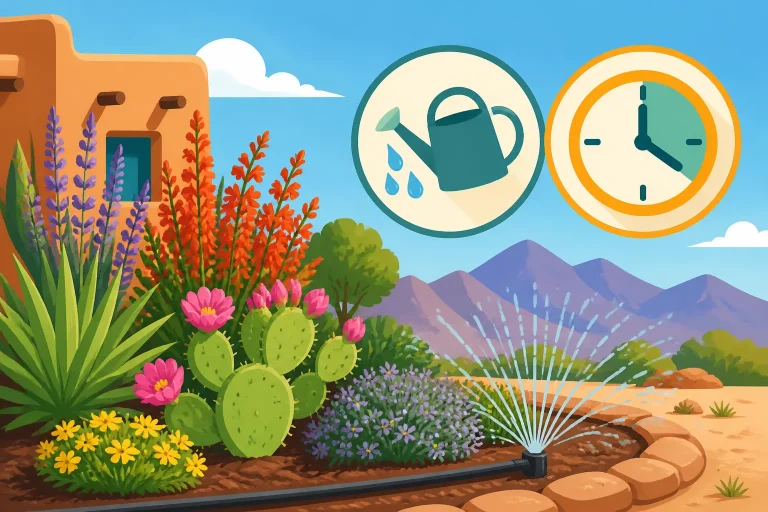
Avoid overwatering simply to keep the surface damp. Soil that stays waterlogged can create problems for seeds and roots. Instead, check moisture near the seed zone and adjust watering to the bed’s texture, exposure, and weather. New Mexico Garden Watering Schedules: Frequency and Run Times offers related guidance for adapting irrigation to changing conditions.
Warm-season crops also need room to grow. Crowded plants can shade one another, compete for water, and make it harder to inspect leaves and harvest. Use the spacing on the seed packet or plant label, and plan the bed so mature plants will fit without blocking access to other crops.
Summer: Keep Crops Growing and Plan for a Fall Harvest
Summer planting is not only about maintaining what is already in the garden. It can also be a useful time to prepare a fall crop. In New Mexico, the possibility of more than one planting window depends on local climate and the time available before colder conditions return. New Mexico State University says gardeners in warmer zones can often plant many crops in both spring and fall planting windows.
That opportunity is not identical for every region or crop. A crop that matures quickly may fit into a later sowing window more easily than one that needs a long warm season. Check the crop’s stated maturity information, then compare it with the conditions your garden is likely to have as the season changes. For planning a second crop, see Planting a Second Vegetable Crop for Fall Harvest in New Mexico.
Choose fall crops with the remaining season in mind
As summer begins to ease, consider crops that tolerate cooler weather or mature relatively quickly. Leafy greens, radishes, and some root crops are common options, depending on your local conditions and the variety. Use seed-packet maturity information as a planning aid, not a guarantee: weather, soil, water, and plant health all affect how quickly a crop grows.
For crops that are normally transplanted, you may be able to start seedlings in a protected spot and move them into the garden when the bed is ready. Direct-sown crops need enough time to germinate and establish before cold weather slows growth. Keep the planting area moist during germination, and protect young seedlings from intense sun or drying winds if the bed is exposed.
Manage heat without abandoning the calendar
A planting calendar is only useful if crops can grow after they are planted. Summer heat and rapid drying can stress young plants and newly sown beds. Check soil moisture rather than relying on a fixed routine, and adjust irrigation to the bed, crop, and weather. Watering needs can change with wind, heat, soil texture, mulch, and plant size.
Mulch can help moderate soil conditions, but it should not be piled against stems or used in a way that prevents water from reaching the root zone. Shade can also help protect crops that struggle in intense afternoon sun, though too much shade may limit growth. Consider the needs of each crop before changing the bed’s exposure.
For established warm-season crops, harvest regularly when produce is ready. Frequent harvesting can help keep plants productive and prevents mature vegetables from sitting on the plant longer than needed. Inspect plants as you harvest, looking for wilt, leaf damage, or signs that irrigation is not reaching the root zone.
Treat successions as small experiments
If you have never planted a crop in a late-season window, try a modest sowing first. A small test row can show whether your garden has enough remaining season for that crop and whether the planting location is suitable. Keep notes on the sowing conditions, emergence, and harvest. Those observations are more useful than trying to make a single calendar work for every corner of the state.
You can also reserve some bed space rather than filling the whole garden at once. Leaving an area available for a later sowing gives you flexibility if spring crops finish early or summer conditions change. This is particularly helpful when the garden’s microclimate is uncertain or when you are learning how fast a crop matures in your conditions.
Fall and Winter: Finish the Season with Realistic Expectations
Fall gardening can extend harvests, but it requires planning backward from the period when outdoor growth is likely to slow. That is different from simply planting at the first sign of cooler weather. Seeds and young transplants need time to establish while warmth and light remain adequate.
Choose crops that suit cool conditions and have a reasonable chance of maturing in your garden’s remaining growing window. A variety with a shorter stated maturity period may be more suitable than one that needs a long season, but maturity information is an estimate rather than a promise. If you are in a colder or higher location, allow more caution than you would in a warm, protected site.
Use weather cues, not a statewide deadline
Fall frost timing varies between locations and from year to year. Avoid treating a regional date as a fixed deadline for every bed. A garden on an exposed slope may cool differently from a sheltered courtyard, and a low-lying area can collect cold air. Check local forecasts as the season progresses and keep records of what happens in your own yard. First Fall Freeze Timing Across New Mexico Regions can help you think about regional differences.
If you want to protect a late crop, prepare materials before a cold forecast arrives. Covers can reduce exposure to some conditions when installed and secured appropriately, but their effectiveness depends on the material, the weather, and how they are used. Do not assume a cover makes a tender crop safe in every freeze. Check the forecast and the plants rather than relying on a calendar alone.
Protect the quality of the harvest
As conditions cool, growth may slow and some crops may become less productive. Harvest vegetables while they are in good condition, and remove diseased or heavily damaged plant material where appropriate. Clear finished crops so that the bed is available for a later planting or seasonal cleanup.
If a crop is still producing, decide whether continued care is worthwhile based on its condition and your local outlook. A healthy crop that tolerates cool weather may continue to provide food; a tender crop with little chance to mature may be better removed to make room for something more suitable. The decision is local and crop-specific.
Winter planning starts before the garden is empty. Keep notes on what grew well, which sowings were too early or late, and how the beds responded to irrigation and weather. If you plan to use the same beds next season, think about how to maintain soil structure and avoid leaving bare soil exposed unnecessarily. Soil Prep and Bed Systems for New Mexico Vegetables has more on preparing garden beds for productive use.
Build a Calendar That Fits Your Own Garden
A helpful planting calendar is more than a list of dates. It connects crop choices to local conditions and gives you a way to adjust when the season does not follow expectations.
Use this process to plan:
- Identify your garden’s growing conditions. Note elevation, exposure, shade, wind, drainage, and whether the bed tends to warm early or stay cold.
- Choose crops by season. Separate cool-season crops from tender warm-season crops, then select varieties that suit your likely growing window.
- Choose a method. Decide whether to direct sow, start indoors, or buy transplants. The method should fit the crop and your ability to care for it.
- Check crop instructions. Use the seed packet or plant label for sowing depth, spacing, and other crop-specific details.
- Wait for suitable conditions. Check that the soil is workable and that the crop is likely to establish under the expected weather.
- Keep a modest first sowing when unsure. Test a small area before committing a whole bed to an unfamiliar crop or seasonal window.
- Record what happens. Note sowing conditions, emergence, growth, harvest, and any weather problems so you can refine next season’s plan.
One common mistake is treating all beds as if they share the same season. If you have a range of exposures, use the warmest bed for crops that need more heat and reserve cooler spaces for crops that prefer moderate conditions. A sheltered bed can be useful for an early start, while a spot with some afternoon protection may help crops that struggle in intense summer conditions.
Another mistake is planting by habit rather than by observation. A crop planted at the same point each year may do well in one season and struggle in another. Soil moisture, wind, and temperature can differ considerably. Keep the calendar flexible enough to accommodate those shifts.
It is also easy to sow too much at once. A full row of a crop that matures together can produce more than a household can use, while a smaller or staggered sowing may provide a steadier harvest. Consider how much space you have, how often you can harvest, and whether you want to preserve or share extra produce.
Use reference calendars as a framework, not a substitute for local decisions. New Mexico Growing Zones: Vegetable Planting and Harvest Dates and Year-Round Garden Planning Across New Mexico Zones can help with broader planning. Then adjust the plan to your particular site, the crop’s growing requirements, and the season’s actual progress.
Frequently Asked Questions
Can one planting calendar work across all of New Mexico?
It can provide a general framework, but it cannot account for every elevation, exposure, or yard microclimate. Use a regional calendar to narrow the season, then adjust based on your garden’s conditions and current weather.
Should I sow seeds or buy transplants?
It depends on the crop and your growing window. Direct sow crops that establish well in place; use transplants for crops that benefit from an indoor start or when you want to prepare plants ahead of suitable outdoor conditions.
When should I plant tomatoes and peppers?
Wait until outdoor conditions are appropriate for tender plants in your location. Indoor starting can prepare seedlings ahead of time, but it does not make the garden warm sooner. Check local freeze guidance and the crop’s requirements before transplanting.
Can I plant vegetables in both spring and fall?
Some gardeners in warmer areas have a spring opportunity and another in fall. Whether a particular crop fits both depends on the local climate, the variety, and how much suitable growing time remains.
Sources
- New Mexico State University — Growing Zones and Planting Information for Home Vegetable Gardens in New Mexico | New Mexico State University – BE BOLD. Shape the Future. (checked November 15, 2026)
Disclaimer
This article is for general informational purposes only and does not constitute professional advice. Laws, prices and regulations vary by location and change over time. Consult a qualified professional for guidance on your specific situation. New Mexico Gardening Guide is not a government agency and is not affiliated with any university extension, state department of agriculture or other government agency.