New Mexico Planting Calendar by Elevation and Zone
New Mexico gardeners often want a planting date they can trust, but elevation, winter cold, and local yard conditions can make a calendar from another part of the state misleading. Use your hardiness zone as a starting point, then adjust for frost risk, soil warmth, and the conditions in your own garden. This approach helps you choose planting windows without treating any date as a guarantee.
What elevation and hardiness zone tell you
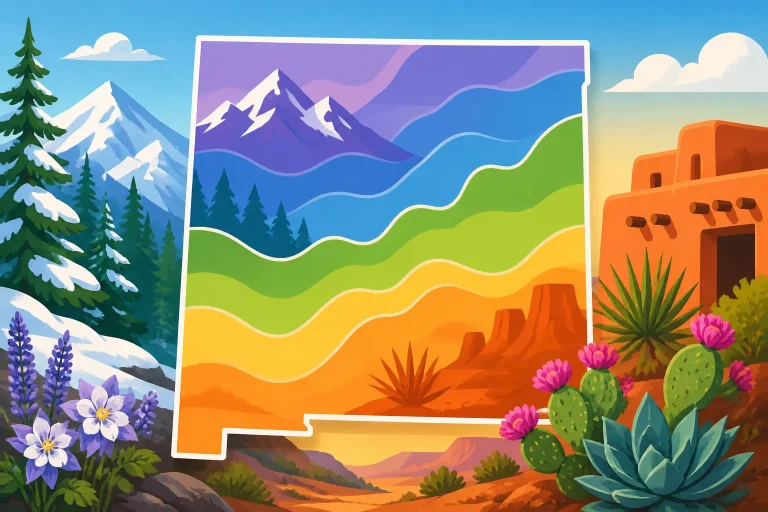
New Mexico State University says New Mexico has eight growing zones. That range reflects how varied the state’s growing conditions can be, but a zone label is not a complete planting calendar for your yard.
A plant hardiness zone is primarily a clue about whether a perennial plant can withstand the area’s winter cold. It can help you compare the winter tolerance of trees, shrubs, and perennial flowers with the conditions where you garden. It does not tell you when the soil will warm in spring, when your last frost will occur, or how long a vegetable crop will have to mature before fall cold returns.
Elevation adds useful context. Higher sites are often cooler and may have a shorter stretch of suitable weather for heat-loving crops. Lower, warmer sites may have more opportunities for warm-season gardening, but intense heat can make some crops struggle. These are broad patterns, not planting dates: slope, shade, wind exposure, and cold-air movement can change conditions within a region.
| Planning clue | What it helps you assess | What it cannot tell you by itself |
|---|---|---|
| Hardiness zone | Whether a perennial is likely to tolerate winter cold | The date to sow seeds or set out tender transplants |
| Elevation and regional climate | Whether your garden tends toward cooler or warmer conditions | The exact frost risk in a particular bed |
| Recent local weather | Whether conditions are suitable for a planting task now | Whether unusual cold or heat will not return |
| Soil warmth and moisture | Whether seeds and roots have a workable planting environment | How quickly every crop will grow |
| Yard microclimate | Whether your site is warmer, colder, sunnier, or more exposed than nearby areas | A fixed schedule that applies every year |
It helps to keep two questions separate. The first is whether a plant can survive the winter in your area. The second is whether a particular crop can grow successfully during the coming season. A plant may be hardy enough to live through winter but still need protection from spring frost, summer heat, or drying winds.
For vegetable planning, start with the crop’s temperature needs and the likely weather at your site. Cool-season crops generally fit periods when temperatures are mild. Warm-season crops need warmer soil and more protection from cold. The broad categories are useful, but the conditions at planting time matter more than a zone label alone.
For a regional overview, see New Mexico Hardiness Zones From Northern Peaks to South Basins. To check how planting windows differ with local conditions, compare it with New Mexico Growing Zones: Vegetable Planting and Harvest Dates. The key is to use these resources as context, then make the final decision with the conditions in your garden in view.
Read your yard, not just the zone label
A zone describes a broad area. Your garden is a smaller place shaped by terrain, sun, shelter, and soil. A sunny bed beside a wall may warm sooner than an exposed bed nearby. A low spot may collect cold air, while a slope with good air drainage may avoid some of that pooling. Shade can delay soil warming, and wind can dry both soil and plants.
New Mexico State University notes that growing periods for individual gardens within a zone may vary by as much as 20 days because of microenvironments. That is why a neighbor’s successful planting date may not be the right date for your yard, even when you live in the same community.
Notice the cold and warm pockets
Watch where frost lingers after a cold night and where it disappears first. Take note of areas that stay shaded into the day, places exposed to strong winds, and corners that receive reflected warmth from walls or paving. These observations are practical clues, not guarantees. A protected spot may still experience a damaging cold snap, and a warm area may overheat later in the season.
If your yard has several distinct conditions, treat them as separate planting areas. A sheltered bed may be suitable for an earlier trial planting, while an exposed bed may need to wait. Keep notes about where each crop is planted and how it performs. Over time, those records can reveal which areas are reliable for early sowing, which need extra protection, and which are better suited to crops that tolerate heat.
For more detail on the way local conditions shift growing windows, see Matching Your Garden Schedule to New Mexico Microclimates and How New Mexico Microclimates Shift Garden Growing Seasons. If your site includes a slope, Why North-Facing Slopes Delay Spring Sowing Dates explains why aspect can matter when deciding whether a bed is ready.
Check the bed itself
Air temperature is only part of the planting decision. Soil that is still cold, wet, or compacted may not be ready for sowing or transplanting, even when the day feels comfortable. Check the planting area rather than judging it from a nearby patio or the temperature in a sheltered spot.
The bed’s texture and drainage affect how it responds to spring weather. Sandy soil may warm and dry differently from heavier soil. A raised bed may change temperature and moisture patterns compared with in-ground soil. If you have not yet matched your garden conditions to a suitable bed system, Soil Prep and Bed Systems for New Mexico Vegetables can help you consider that choice.
Soil condition also affects how quickly a planting area becomes workable after rain or irrigation. Avoid treating a calendar date as permission to work soil that is saturated or easily damaged by handling. Where soil questions are part of the problem, Understanding Soil Testing Procedures for New Mexico Gardens offers a useful next step for assessing what is in the bed.
Build a planting calendar around crop needs
A reliable calendar is a planning tool, not a promise that the weather will cooperate. Build it by sorting crops according to how they respond to temperature, deciding whether each will be direct-sown or transplanted, and then checking whether local conditions suit the intended planting task.
Keep separate notes for sowing seeds, setting out transplants, and expected harvest periods. These are different milestones. A crop started indoors may be ready for the garden before the soil or weather is suitable for it. A seed sown directly into cool soil may take longer to emerge than expected. Keeping the steps separate prevents “start this crop” from being mistaken for “plant it outside now.”
Sort crops by temperature preference
Cool-season crops are typically planned for mild conditions. They may fit an early planting window, but that does not mean their seeds will germinate well in every cold bed or that young plants are immune to a hard freeze. Check the crop’s needs and your local forecast before sowing or transplanting.
Warm-season crops are more sensitive to cold soil and frost. A few warm afternoons do not necessarily mean that the bed is ready. Wait for a suitable stretch of conditions and be prepared to protect young plants if the forecast changes. A warm, sheltered garden can be a useful place to trial an earlier planting, but it should not dictate timing for the rest of the yard.
If you are deciding whether to sow seed or set out a transplant, Direct Seeding vs. Transplanting Vegetables in New Mexico explains how the two methods affect planning. For indoor starts, see Starting Vegetable Transplants Indoors for New Mexico Gardens. These approaches can help you use the growing season well, but neither removes the need to check outdoor conditions before planting.
Work backward from the crop
Read the seed packet or plant information for the crop’s temperature preferences, growth habit, and time to maturity. Then consider how much suitable weather remains before the season turns too hot or cold. A crop that needs a long period to mature may be a poor fit for a late planting, even if it can tolerate the conditions at the moment you sow it.
Use the stated maturity information as a planning estimate rather than a guarantee. Growth can slow in cool soil, high heat, drought stress, or other unfavorable conditions. If the garden has a short or uncertain window, prioritize crops that fit the likely season and avoid committing more space than you can support.
Direct sowing and transplanting solve different problems. Direct sowing avoids transplant shock and works well for crops that establish readily in place. Transplants can give a crop a head start, but they may need gradual adjustment to outdoor conditions. Seedlings raised in sheltered conditions can be damaged if moved abruptly into sun, wind, or cold. The best method depends on the crop and the site, not just the calendar.
Use seasonal check-ins
Instead of relying on a single date, revisit the garden as conditions change. Check the forecast, feel the soil, and inspect the bed’s moisture. Before a planting, ask whether the crop can tolerate the expected conditions and whether you have a plan for a sudden change in weather.
A useful calendar includes a flexible window and a backup plan. For example, you might identify the conditions that would make a bed suitable, then postpone the task if those conditions are not present. You can also keep row covers or other appropriate protection available, while following their instructions and checking that the crop receives adequate light and ventilation.
For a broader seasonal framework, New Mexico Seasonal Vegetable Planting and Sowing Calendar can help organize the year. For a closer look at how elevation and zone affect the overall schedule, see New Mexico Planting Calendar by Elevation and Zone alongside local observations. A calendar becomes more useful when it helps you decide what to check, rather than asking you to follow a date regardless of weather.
Adjust the plan for cooler and warmer sites
Elevation and regional climate influence which crops are convenient to grow and how much flexibility a gardener may have. These differences are real, but they do not create a universal calendar for every garden at a given elevation. Use the descriptions below to identify questions to investigate at your site rather than treating them as fixed rules.
| Garden tendency | Planning considerations | Practical adjustment |
|---|---|---|
| Cooler or higher site | Spring warmth may arrive later, and fall cold may limit late plantings | Favor crops and planting windows that fit a shorter or cooler season |
| Warmer or lower site | Heat may arrive earlier and become a challenge for some crops | Plan around heat stress as well as frost risk |
| Exposed or windy site | Soil and foliage may dry quickly, and young plants may be stressed | Consider wind exposure when selecting a bed and checking moisture |
| Sheltered urban or courtyard site | Walls and paving may alter local warmth and shade | Observe conditions directly and avoid assuming shelter removes frost risk |
| Low-lying garden area | Cold air may settle during calm, clear conditions | Monitor frost exposure separately from nearby slopes |
Cooler or higher gardens
In a cooler garden, the challenge is often fitting crop growth into a suitable stretch of weather. A crop that matures slowly may need an earlier start, a protected growing area, or a different planting choice. Starting seedlings indoors may help with some crops, but seedlings still need to be hardened gradually and moved outdoors only when conditions suit them.
Do not interpret a mild spell as proof that spring cold has passed. Keep track of conditions in the actual bed, and consider whether the crop can tolerate a return to cold. For mountain and high-elevation planning, High-Elevation Mountain Planting Schedules for Short Growing Seasons provides a more focused way to think about crop choice and timing.
A cooler site can also offer an advantage for crops that prefer mild weather, particularly when warmer locations are facing intense heat. The right question is not simply “Is this garden too cold?” but “Which crop fits the conditions this site is likely to provide?” Matching the crop to the season can be more productive than trying to force a heat-loving crop into a short window.
Warmer or lower gardens
Warm conditions can give a gardener more options for heat-loving crops, but they also introduce a different constraint: sustained heat may interfere with growth or fruit set. The calendar should account for both ends of the season. A spring planting may face cold risk early, while a later planting may encounter very hot conditions.
Pay attention to the crop’s response as temperatures rise. If plants show heat stress, a date-based schedule cannot solve the underlying problem. Shade, irrigation, mulch, and crop selection may all matter, though any products or methods should be used according to their instructions. For southern desert timing, Las Cruces Planting Calendar: Starting Crops in Southern Deserts and Planning Warm-Season Sowing Around Southern New Mexico Heat offer relevant context.
In a warm location, a second planting can sometimes be possible when the first crop has finished, but it depends on the crop and how much suitable weather remains. Avoid assuming that any open bed can support a replacement crop. Review its maturity needs, the expected season ahead, and whether you can meet its water and temperature needs.
Manage frost, heat, water, and changing weather
The most useful planting calendar leaves room for weather that does not follow expectations. Frost dates are estimates, and a calendar cannot tell you what will happen in a particular yard on a particular night. Use local forecasts and your own observations to make decisions, especially when moving tender plants outside or sowing crops sensitive to cold.
Treat frost as a risk, not a switch
A predicted or historical frost date should not be treated as a guaranteed end to cold weather. Conditions can differ across nearby neighborhoods and within a single yard. A low spot, open field edge, or exposed bed may cool differently from a sheltered garden. Even after a mild stretch, cold can return.
If frost is forecast, consider the crop’s sensitivity and the protection available. Covers can reduce exposure in some situations, but their suitability depends on the crop and the forecast. Follow product instructions, make sure plants are not trapped under unsuitable coverings, and remove protection when conditions call for it. If a planting is valuable or difficult to replace, waiting for a safer window may be preferable to accepting avoidable risk.
For help thinking through frost and planting decisions, see New Mexico Frost Timing and Growing Season Guide and Spring Frost Timing by New Mexico Zone: Planning Seed Starts. These resources complement a local forecast; neither should be read as a promise that frost cannot occur outside an expected window.
Plan for heat as well as cold
A planting calendar focused only on the last spring frost misses an important New Mexico gardening challenge: heat and rapid drying. A crop that survives a cold snap may still suffer when the bed becomes hot and dry. This is especially important when deciding whether to continue planting into warmer conditions or make room for a different crop.
Check soil moisture rather than assuming that a surface that looks dry tells the whole story. Water needs vary with soil, weather, plant size, and irrigation method. Avoid copying a fixed schedule from a different yard. For seasonal irrigation decisions, see New Mexico Garden Watering Schedules: Frequency and Run Times and Adjusting Yard Irrigation Across the Seasons in New Mexico.
Mulch can help moderate soil conditions, but the right material and use depend on the bed and crop. Do not pile material against plant stems or assume that mulch eliminates the need to check moisture. Mulch Depth Rules for Cooling High-Desert Vegetable Beds provides more specific context for using mulch in vegetable beds.
Reassess after weather shifts
A forecasted cold spell, prolonged heat, or strong wind can change whether a planned planting makes sense. Keep the calendar flexible enough to delay sowing, protect seedlings, or move a crop to a more suitable part of the garden. If conditions turn unfavorable, changing the plan is often more practical than trying to hold to a date.
Record what happened after each planting. Note whether seeds emerged well, how transplants handled the move outdoors, whether frost reached a particular bed, and when heat began to stress the crop. This turns a general calendar into a more useful record of your own garden’s behavior.
Create a calendar you can revise each season
A practical planting calendar does not need to be complicated. It needs to show what you plan to grow, what conditions each crop needs, and what you will check before planting. Keep it somewhere easy to update, and make separate notes for different beds if they have noticeably different exposure or temperature patterns.
Use this process to build a working plan:
- Identify the broad growing zone for your area and note what it suggests about winter cold, without treating it as a vegetable planting date.
- Describe each bed by its sun exposure, slope, wind protection, shade, drainage, and tendency to hold cold.
- Sort planned crops by whether they prefer cool or warm growing conditions.
- Decide which crops will be sown directly and which may be started as transplants.
- Check the crop’s growing requirements and the current condition of the soil before choosing a planting window.
- Review the local forecast before sowing or moving tender plants outdoors.
- Record results and adjust the plan the next time you grow that crop.
This process helps prevent common calendar mistakes. A garden zone is not the same as a frost forecast. A warm afternoon is not proof that soil is ready for every seed. A crop’s suitability for the region does not mean it will thrive in every bed. And a neighbor’s schedule may not transfer to a site with different sun, slope, or cold-air movement.
New Mexico State University lists a publication on growing zones and planting information for home vegetable gardens: Circular 457-B: Growing Zones and Planting Information for Home Vegetable Gardens in New Mexico. It is a useful reference to consult alongside the conditions you observe in your own yard. Use the official New Mexico State University website to locate the publication and any current planting information.
The strongest plan is a combination of regional guidance and local observation. Use elevation and zone to understand the general setting. Use the crop’s needs to decide what kind of weather it requires. Then use the soil, forecast, and behavior of your own garden to decide whether the time is right. That approach allows a planting calendar to guide decisions without pretending that every New Mexico garden follows the same schedule.
Frequently Asked Questions
Does my hardiness zone tell me when to plant vegetables?
No. A zone is useful for understanding winter cold and perennial plant survival, but it does not give a dependable vegetable planting date. Check crop needs, soil conditions, and local frost risk.
Why might my planting dates differ from a neighbor’s?
Gardens close together can have different sun, shade, slope, wind exposure, and cold-air patterns. New Mexico State University notes that microenvironments can make growing periods differ within the same zone.
Should I use elevation or zone when planning?
Use both, but for different clues. Zone helps frame winter hardiness, while elevation and local terrain help you think about whether your site tends to be cooler or warmer. Neither replaces checking the garden itself.
What should I do if the calendar says to plant but the soil is cold?
Wait until conditions suit the crop. A planting window is guidance, not a requirement. Check soil moisture and warmth, review the forecast, and delay sowing or transplanting if the bed is not ready.
Sources
- New Mexico State University — Growing Zones and Planting Information for Home Vegetable Gardens in New Mexico | New Mexico State University – BE BOLD. Shape the Future. (checked November 15, 2026)
- New Mexico State University — Home Vegetable Gardening in New Mexico | New Mexico State University – BE BOLD. Shape the Future. (checked November 15, 2026)
- New Mexico State University — Publications Horticulture | New Mexico State University – BE BOLD. Shape the Future. (checked November 15, 2026)
Disclaimer
This article is for general informational purposes only and does not constitute professional advice. Laws, prices and regulations vary by location and change over time. Consult a qualified professional for guidance on your specific situation. New Mexico Gardening Guide is not a government agency and is not affiliated with any university extension, state department of agriculture or other government agency.