New Mexico Hardiness Zones From Northern Peaks to South Basins
New Mexico gardeners often see a hardiness-zone label and wonder whether it can tell them when to plant, what will survive, or why a neighbor’s yard behaves differently. A zone is useful, but it answers only part of the question. Here’s how to read it alongside elevation, exposure, frost risk, and the conditions in your own garden.
What a hardiness zone tells you
A hardiness zone is a broad way to describe how cold a location tends to get in winter. Its main use is helping gardeners judge whether a perennial plant is likely to withstand the coldest conditions where it will grow. Trees, shrubs, and other plants that remain in the ground year after year are especially affected by winter survival.
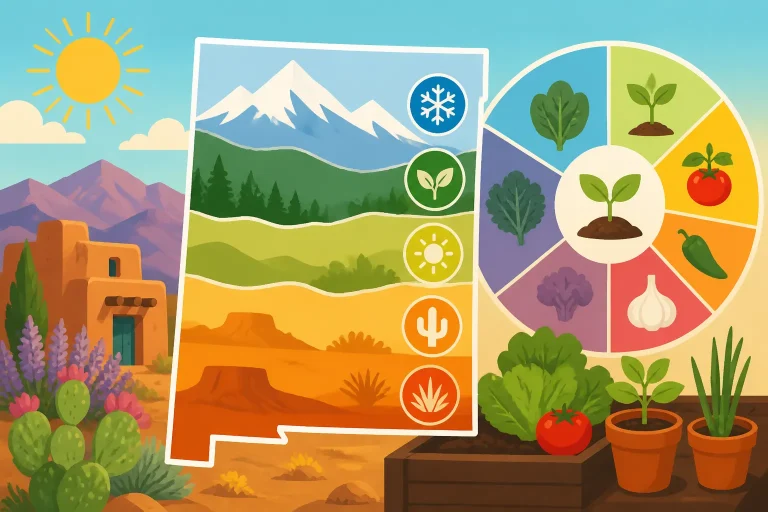
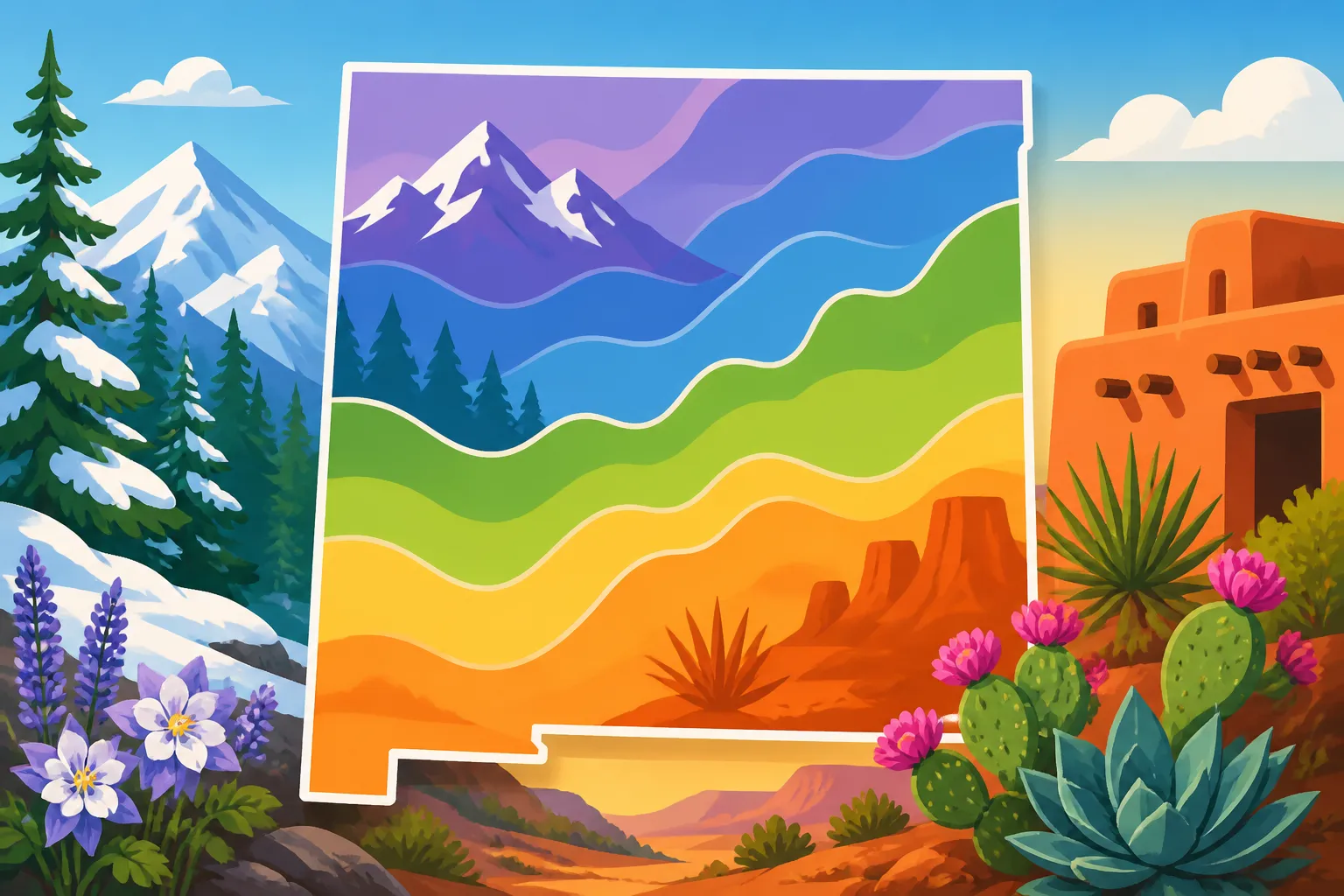
According to New Mexico State University, New Mexico has eight growing zones. That range reflects how much growing conditions can vary across the state. It is a useful reminder that advice suitable for one New Mexico garden may not fit another, even when both are in the same state.
A zone is not a promise that a plant will thrive. It does not account for every winter’s weather, a plant’s health, the shelter around it, or how quickly the soil drains. A plant may be considered hardy for a location and still struggle if it is growing in a windy, exposed site or if its roots remain too wet. Conversely, a sheltered garden can sometimes support a plant that would be more vulnerable in an open spot nearby.
The zone is also not a planting date. It does not tell you when the last spring frost will occur, when to sow seeds, or when a vegetable bed is ready for warm-season crops. Those questions depend on seasonal weather and local conditions. A planting calendar and a hardiness map serve different purposes, so it is worth using both rather than asking one to answer everything. For statewide timing, New Mexico Planting Calendar by Elevation and Zone can help connect broad regional differences with garden planning.
Think of a zone as an initial filter. It can help you narrow a plant list before considering more specific questions:
- Is the plant suited to the coldest winter conditions likely at the site?
- Does it also tolerate the heat, sun, wind, or dryness of that location?
- Is the soil suitable, and can it drain adequately?
- Will the plant’s spring growth be exposed to late cold weather?
- Does the plant need a longer warm season than the site can usually provide?
Those details matter because winter survival is only one part of a plant’s fit. A plant can survive cold and still produce poorly, grow slowly, or need more water and protection than a gardener wants to provide. The best use of a hardiness zone is to narrow the choices, then check whether the whole site suits the plant.
Why conditions vary across New Mexico
A statewide zone map is necessarily broad. New Mexico’s landscape includes differences in elevation, terrain, and exposure, and those differences can affect local growing conditions. A garden in a high, exposed setting does not necessarily experience the same pattern of winter cold as a garden in a sheltered location. A nearby slope, wall, or low-lying area can also alter how cold air and sun affect a planting.
That is why a regional label should not be treated as a precise description of every yard. A map can help orient a gardener, but a location’s conditions are more detailed than a colored patch. Even within a community, the growing experience can vary with the garden’s position and the way the site interacts with weather.
Elevation is an important part of the picture, but it is not the only part. Wind can increase stress on plants and dry soil and foliage. Sun exposure can warm a site during the day, while shade can slow warming. The shape of the land influences where cold air settles or drains. Walls and structures can make a spot more sheltered, but can also create conditions that are hotter or drier than the surrounding yard.
The practical lesson is not to guess a zone from a town name or assume that every yard in a broad region shares identical conditions. Use a current map to get a starting point, then compare the map result with what happens in the garden. A useful local record might note where frost lingers, which areas warm early, where wind causes damage, and which plants reliably overwinter.
If you are comparing two areas, look beyond their map labels. Ask whether they have similar exposure, elevation, shelter, and soil conditions. A map label can be a helpful comparison, but it does not erase differences between sites. For more on how local conditions shift the timing of garden work, see How New Mexico Microclimates Shift Garden Growing Seasons.
A broad statewide view is still valuable. It discourages the idea that a single calendar or plant list can serve every New Mexico gardener equally well. But it is only the beginning of a decision. Your garden’s own patterns, observed over time, can help translate a regional map into more useful choices.
How to read a map result without overrelying on it
Start by checking the map for the area where you garden, rather than relying only on a label remembered from an old plant tag or a general regional description. Maps can be updated, and a label copied from an older reference may not match the current map. If your garden lies near a boundary or in varied terrain, treat the result as an estimate rather than a precise measurement of your yard.
ZIP codes can provide a broad orientation, but they cover areas that may contain different exposures and terrain. A ZIP code does not describe the exact conditions at a particular garden. Avoid treating a ZIP-based result as a guarantee for a specific address or planting bed. The more varied the landscape around you, the more useful it is to combine the map result with direct observation.
When a plant label gives a hardiness range, compare that information with the map result for your garden. Then check the plant’s other needs. Does it tolerate intense sun? Is it suited to the soil and drainage? Does it need protection from wind? Is it likely to be damaged by a late freeze after new growth starts? A favorable zone match cannot compensate for an unsuitable site.
If your garden appears close to the edge of a plant’s stated hardiness range, think through the consequences before committing to a large planting. You might try a small number of plants first, choose a protected location, or select a plant with a wider tolerance. For a permanent tree or shrub, the cost of choosing poorly can include years of slow growth or the need to replace it, so careful matching is worthwhile.
Map results can also help explain why plants from catalogs or garden centers behave differently than expected. A label that seems reassuring may refer only to cold tolerance, not to heat, drought, soil, or the length of the local growing season. Read plant descriptions as a set of clues, not as a complete care plan.
For a broader look at map-based planting decisions, New Mexico USDA Growing Zones: Mapping ZIP Codes From 5a to 8b discusses how ZIP-code mapping can help orient gardeners. Do not take a broad location label as a substitute for checking the conditions at the actual planting site.
A simple way to use a map is to make it the first step in a decision, not the final one:
- Check the current map for your general area.
- Note whether the garden’s terrain or exposure may differ from the map’s broad description.
- Compare the plant’s cold tolerance with the map result.
- Review the plant’s needs for heat, water, soil, sun, and drainage.
- Observe how the site behaves through changing seasons.
- Adjust plant selection or siting when the map and garden experience do not seem to agree.
This approach keeps the map useful without asking it to do more than it can. It also helps explain why a plant’s success in a neighbor’s yard does not automatically predict success in yours.
Hardiness zones are not frost dates or planting calendars
One of the most common planning mistakes is using a hardiness zone as if it were a calendar. A zone describes winter cold tolerance in broad terms; it does not provide a reliable date for sowing, transplanting, or setting out tender plants. Those decisions depend on the seasonal pattern of frost and warmth, along with soil temperature and the plant’s own requirements.
This distinction is especially important for vegetable gardens. Many vegetables are grown as annuals, so their success depends less on whether the plant can survive winter and more on whether the crop can germinate, grow, and mature during the available season. A hardy perennial may tolerate winter cold but still be unsuitable for a spot with poor drainage or intense summer stress. A warm-season vegetable may be perfectly viable in a region yet vulnerable if planted before cold conditions have passed.
Use a calendar for timing and a zone map for winter survival. A local frost guide can help you think about the risk of spring cold and the approach of autumn cold, but frost timing is not fixed from year to year. Gardeners should allow for variability instead of treating a typical date as a guarantee. For more on how those seasonal limits affect planting decisions, see New Mexico Frost Timing and Growing Season Guide.
Different crops also respond differently to cold. Some tolerate cool conditions and can be planted while the weather is still unsettled. Others need warmer soil and are easily damaged by a cold snap. This is why a calendar organized by crop type is more useful for sowing and transplanting than a hardiness label alone. New Mexico Seasonal Vegetable Planting and Sowing Calendar can support that kind of crop-by-crop planning.
A practical planning sequence is to consider the crop or plant first, then the timing and site:
- For a perennial, check cold tolerance and suitability for the garden’s winter conditions.
- For a vegetable, check when it grows best and how long it needs to reach harvest.
- For spring planting, consider frost risk and whether the soil is ready, not just the map label.
- For fall planting, consider whether the crop has enough favorable growing time before cold weather returns.
- For any planting, check exposure, water needs, and soil conditions.
A hardiness zone can still be relevant to a vegetable garden. It may help explain which perennial herbs, berry bushes, or fruit trees are worth considering. But it is not a shortcut for deciding when to sow a row of seeds. If you are planning to grow both perennial and annual crops, keep those questions separate in your notes: winter survival for established plants, and seasonal timing for crops that must mature within a particular window.
This separation prevents a frustrating mismatch between a plant that is theoretically suited to the region and a planting date that is poorly timed. It also helps you use calendars with more confidence: a calendar gives a useful planning window, while local observations help you decide whether conditions are favorable in your garden.
Microclimates can change what works in your yard
A microclimate is a small area whose conditions differ from those around it. It can be created by terrain, shelter, hard surfaces, shade, wind exposure, or the way the sun reaches a spot. These differences can affect plant survival and growth even when the whole yard falls within the same broad map area.
A sheltered bed beside a structure may experience different wind and temperature effects than an open bed. A low spot may collect cold air, while a slope can have different exposure and drainage. A wall that provides shelter can also reflect heat and make nearby soil dry faster. Shade may protect a plant from harsh afternoon conditions, but it may also leave the soil cooler or keep foliage damp longer.
Instead of assuming that one part of the yard represents all of it, observe different planting areas separately. Keep notes on where plants emerge early, where frost damage appears first, where soil stays wet, and where wind causes the most stress. Notice whether a spot’s exposure changes with the season, especially if nearby structures or deciduous plants provide shade at some times but not others.
Those observations can be more useful than trying to assign a more precise zone to every bed. They help answer a practical question: which plant belongs in which place? A cold-sensitive perennial may do better in a sheltered spot, while a plant that needs more sun may perform better in an open bed. A wet area might suit plants that tolerate moist soil but be a poor choice for plants that require good drainage.
When evaluating microclimates, focus on the conditions a plant actually experiences:
- Cold exposure: Is the planting area open to wind or sheltered by a structure or vegetation?
- Sun and shade: Does the site receive strong afternoon sun, morning sun, or substantial shade?
- Air movement: Does wind pass through freely, or is the spot protected?
- Drainage: Does water soak in, move away, or remain around the roots?
- Seasonal behavior: Does the area warm early, stay cool, or show frost damage more often than nearby spaces?
A map can’t capture every one of these details. That does not make the map useless; it makes observation a necessary partner. If a plant fails, look for the condition that may have caused the problem before concluding that its hardiness information was wrong.
For help matching garden plans to these local variations, Matching Your Garden Schedule to New Mexico Microclimates offers a useful companion topic. Gardeners who understand their own microclimates can make better use of a broad regional calendar and avoid treating every bed as if it had identical growing conditions.
Choosing plants with more than winter survival in mind
Hardiness is a starting point for choosing trees, shrubs, and perennials, but a resilient planting needs to fit the full site. A plant that tolerates winter cold may still be poorly suited to a hot, exposed, dry, or poorly drained location. A plant’s long-term performance depends on how well its needs align with the garden’s conditions and how much care the gardener can realistically provide.
Begin with the plant’s main requirements. Look for information about preferred sun, soil, drainage, moisture, and heat tolerance. For a perennial, also consider when it starts growing in spring. If it puts out tender growth early, a late cold spell may damage that growth even if the established plant can survive winter. For a plant grown for fruit or flowers, survival alone is not the goal; you also need suitable conditions for growth and production.
Think about the planting location before buying. A plant suited to a sunny, well-drained site may struggle in a shaded, waterlogged corner. Moving it to a better location later may be difficult, especially once it has become established. For large or long-lived plants, taking time to compare the site and plant requirements can prevent costly mistakes and reduce the need for corrective care.
Plant labels are useful but brief. If a label gives only a hardiness range, look for additional information about the plant’s other needs. If those details are unclear, choose a plant with a track record of fitting similar site conditions or consult a knowledgeable local source. Do not assume that one successful example in a nearby yard proves a plant will work everywhere; its location may have very different shelter, soil, or water.
Good plant selection also includes considering how much support a plant may need. A more marginal choice might require a protected location or extra attention during stressful weather. That may be worthwhile for a plant a gardener particularly wants, but it is a real trade-off. If low maintenance is the priority, choose plants that fit the site naturally rather than relying on repeated interventions.
For New Mexico landscapes, matching plants to the local site is more useful than treating the state as a single gardening environment. Matching Landscape Plants to Your New Mexico Elevation and Water can help frame plant selection around local conditions, while Sun- and Heat-Tolerant Plants for High-Desert New Mexico Yards focuses on exposure and summer stress as part of the decision.
A thoughtful selection process asks:
- Is this plant likely to tolerate the winter conditions at the site?
- Will it also handle the expected summer heat and sun?
- Does the soil drain and provide the conditions the plant needs?
- Can the gardener meet its water needs without creating other problems?
- Is the planting location protected enough for the plant’s vulnerability?
- Is the plant’s expected size suitable for the space over time?
A zone match answers only part of the first question. Treating it as a screening tool rather than a complete recommendation makes it easier to build a garden that is both more durable and more manageable.
A practical way to use zones through the gardening year
A hardiness map is most useful when it becomes part of a broader planning routine. Use it when choosing plants that will remain in the ground, then revisit the site and seasonal conditions before planting. This avoids the common trap of making a long-term plant choice based on a single label and a short description.
When planning a new perennial bed, start with the map result and the plant’s stated cold tolerance. Then evaluate the specific location. Check whether it is windy or sheltered, whether it gets strong sun, and whether water drains well. If the site has difficult conditions, either select plants suited to those conditions or choose a more favorable planting area.
When planning vegetables, start with the crop’s seasonal needs rather than the hardiness zone. Determine whether it prefers cool or warm growing conditions and whether it needs to be started indoors or can be sown directly. Use regional timing information as a guide, then pay attention to the actual conditions that season. A calendar helps organize the work; it does not remove weather variability.
For an established garden, use the map as context when reviewing what succeeded or failed. If a plant dies after a cold period, consider whether the site was exposed, whether the plant was established, and whether other stresses may have contributed. If a plant survives but grows poorly, look beyond winter cold to soil, water, sun, and heat. The map is most helpful when it informs diagnosis rather than providing a single explanation.
Keep a simple garden record. It does not need to be elaborate. Note which plants did well, where they were planted, and what conditions stood out. Record any noticeable differences between sheltered and exposed sites. These observations can guide future choices and may help clarify why a general recommendation did or did not fit your yard.
A seasonal review can follow a consistent pattern:
- Before planting: Check whether the plant’s cold tolerance appears suitable, then evaluate its other requirements.
- During spring: Watch for frost damage, delayed growth, and differences in how quickly sites warm.
- During summer: Note heat, sun, wind, and soil moisture issues that affect plant performance.
- As cold weather approaches: Review which plants have established well and which sites seem more exposed.
- When planning again: Use both the map and your garden notes to refine plant choices and locations.
This is also a good time to distinguish an isolated setback from a recurring pattern. One poor season may reflect unusual weather or a planting problem. Repeated stress in the same location suggests that the site may not suit the plant. Moving the plant, changing the selection, or adjusting the garden layout may be more effective than trying to compensate indefinitely.
The goal is not to find a single label that predicts every result. It is to combine regional information with the evidence your garden provides. A map offers a broad view, a calendar helps with timing, and local observation fills in the detail. Used together, they support more confident decisions from plant selection through seasonal care.
Frequently Asked Questions
Does a hardiness zone tell me when to plant vegetables?
No. A hardiness zone is mainly a tool for considering whether perennial plants can withstand winter cold. Vegetable timing depends on the crop’s growing preferences, seasonal frost risk, soil conditions, and local weather. Use a planting calendar for timing and a zone map as background information.
Can two gardens in the same area have different growing conditions?
Yes. Terrain, exposure, shade, wind, shelter, and drainage can create different conditions within a neighborhood or even within one yard. A broad map result is a starting point, not a complete description of every planting bed.
Should I choose a plant just because its hardiness range matches my garden?
Not on that information alone. Check the plant’s needs for sun, soil, drainage, moisture, and heat as well as its cold tolerance. A good match in one respect does not guarantee that the plant will thrive in the site.
What should I do if a map label and my garden experience seem inconsistent?
Recheck the map result, then consider the exact planting location and the conditions the plant experienced. Wind, drainage, exposure, and seasonal weather may explain the difference. Keep notes on what happens in the garden and use them alongside map information when planning future plantings.
Sources
- New Mexico State University — Growing Zones and Planting Information for Home Vegetable Gardens in New Mexico | New Mexico State University – BE BOLD. Shape the Future. (checked November 15, 2026)
Disclaimer
This article is for general informational purposes only and does not constitute professional advice. Laws, prices and regulations vary by location and change over time. Consult a qualified professional for guidance on your specific situation. New Mexico Gardening Guide is not a government agency and is not affiliated with any university extension, state department of agriculture or other government agency.